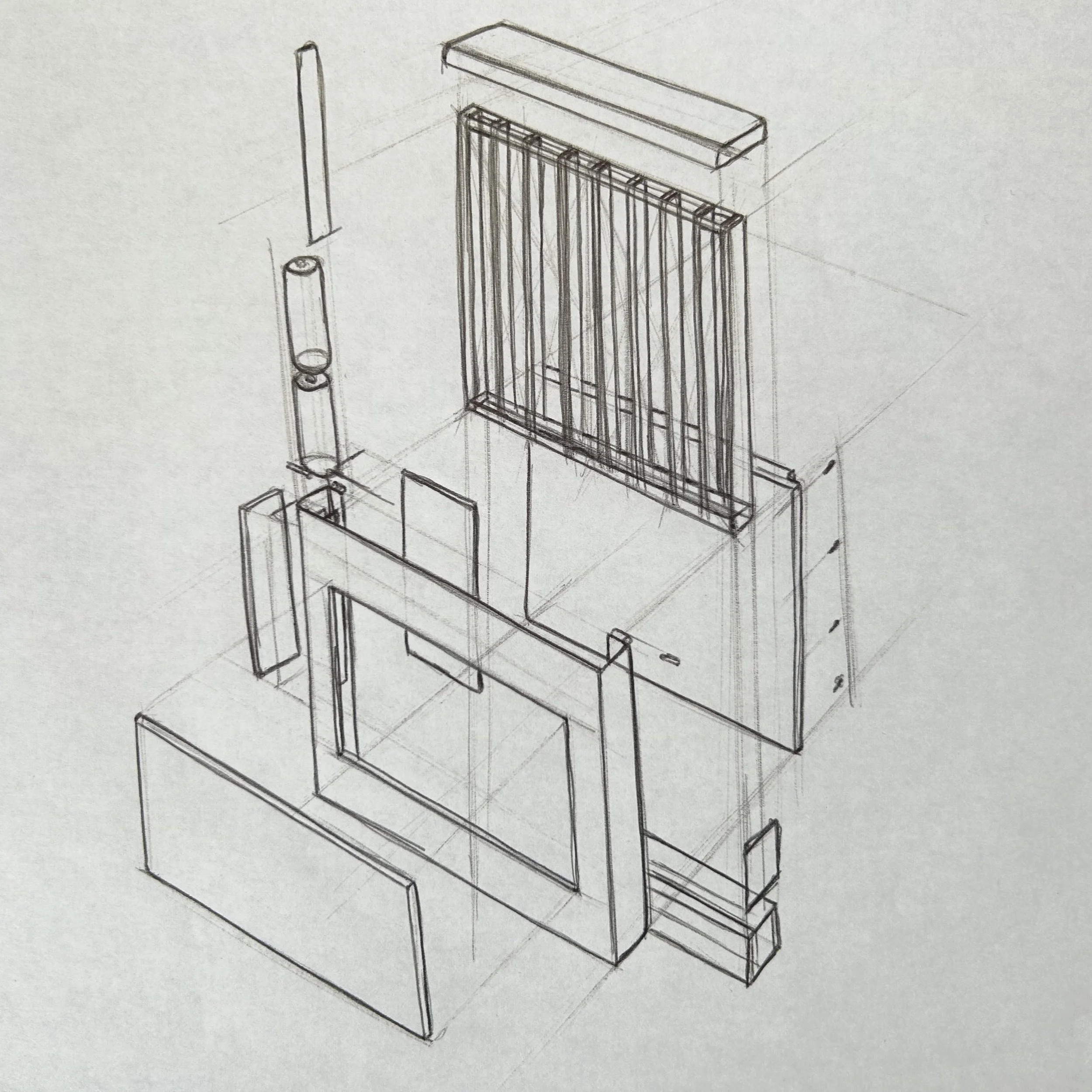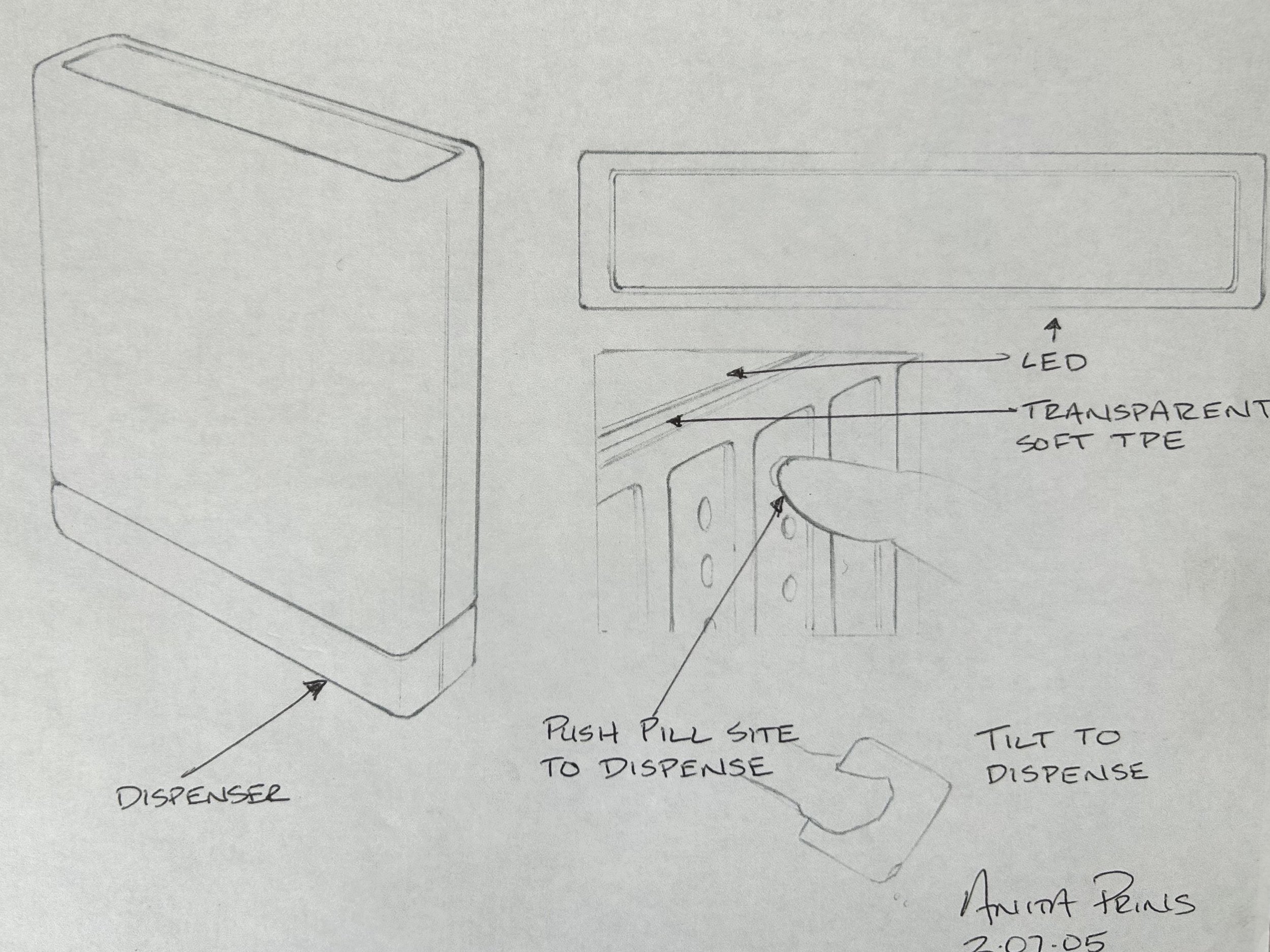
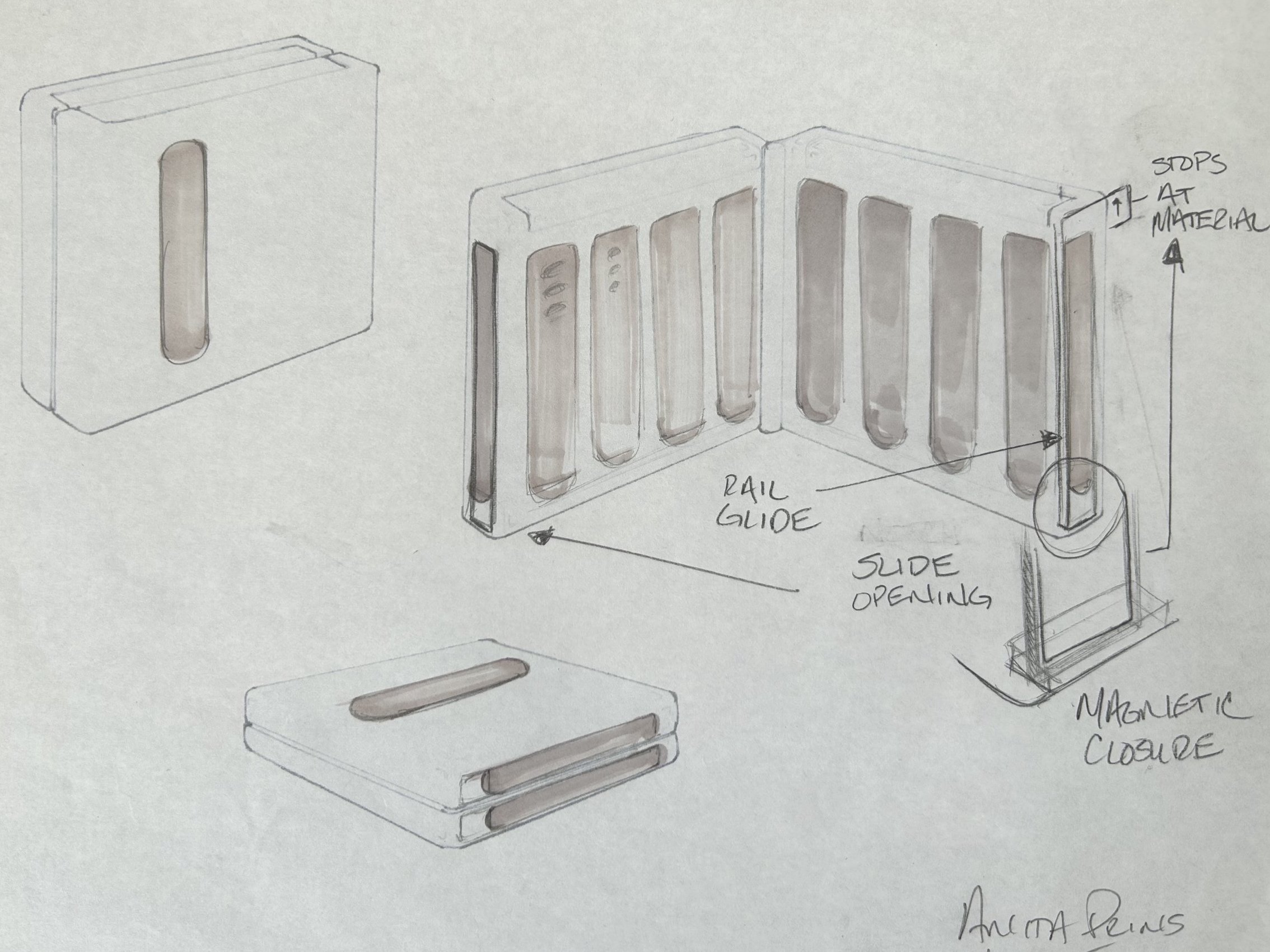
This programmable medication dispenser concept was developed in 2002 in response to emerging trends toward blister-pack pharmaceuticals and the needs of homebound and aging-in-place adults under medical care. The system allows a healthcare practitioner to program medication timing, supporting accurate, on-schedule dosing without relying on multiple plastic pill organizers or complex self-management routines. The design addresses several barriers at once: the fine motor difficulty of opening small containers, handling multiple pills at once, and coordinating swallowing two or more tablets.
Engineered for blister packs, the dispenser uses food-grade metal and polymers, with an electronic component powered by a rechargeable battery designed to last similarly to a TV remote. By consolidating supply and dispensing into a single device, it reduces how often medical aides must refill traditional 7-day pill organizers and lowers the risk of accidental over-administration from multiple open containers. The aesthetic and interaction design draw inspiration from bingo halls, handheld candy gadgets, and cereal boxes, bringing a sense of familiarity and approachability to a medical device category often perceived as clinical and cold. This was one of the most complex product designs in the portfolio, integrating multiple materials, safety considerations, and electronic logic around a simple goal: to make medication management safer, less expensive, and less time-consuming for seniors and their caregivers.