
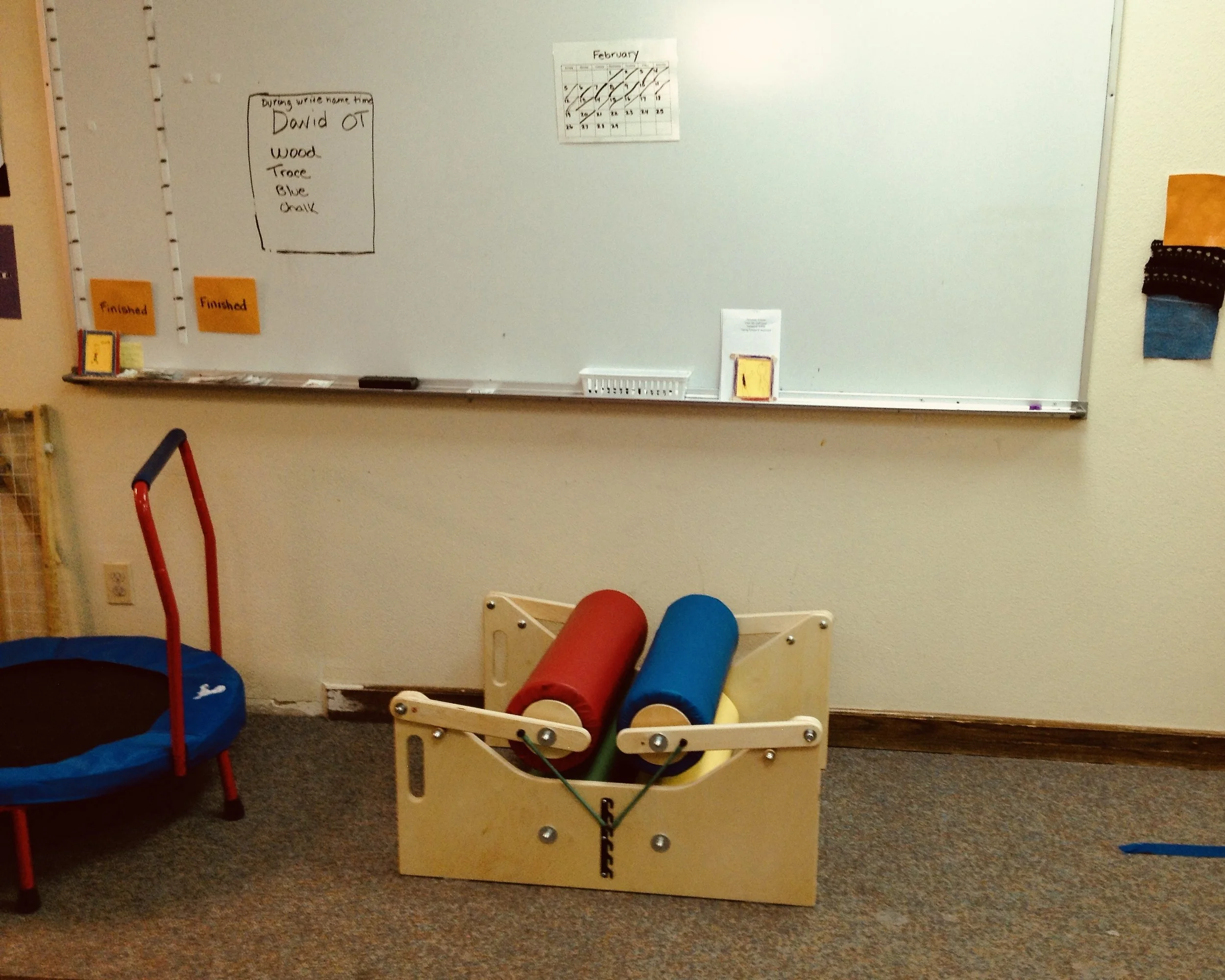
This grade K–12 occupational therapy project captures a sensory modulation space created to support students who struggled with active listening, self-regulation, and classroom participation. The work involved observing and assessing each child’s sensory needs, then designing environmental supports and activities that made it easier to engage with peers, teachers, and learning tasks in the role of student. The space also functioned as an educational tool for teachers and families, offering compensatory strategies that aligned with each student’s strengths, needs, and interests.
At the center of the image is a body roller: students crawl between the upper and lower rollers and pull themselves through using their arms, receiving deep tactile compression that stimulates the nervous system’s calming response. This type of input is especially supportive for children who are highly responsive to visual or auditory stimuli and benefit from organizing tactile pressure. The nearby rebounder can offer additional regulating movement, helping students shift from dysregulation toward readiness to learn.
Insights from this work later informed solutions for adults in workplace settings, underscoring the shared truth that thoughtfully designed environments profoundly shape how humans can succeed in their roles.